


Camping in Antarctica: The Night I Dug a Hole in the Snow and Slept There

Wait… You Can Camp in Antarctica?

Yes. You can.
But let’s be clear. Camping in Antarctica is not something you just plan independently. It’s an optional overnight excursion offered on select Antarctica expedition cruises — small-ship voyages designed specifically for exploration.
Camping is just one optional activity within that larger expedition framework.
I experienced it while sailing with Atlas Ocean Voyages, a line known for blending true expedition access with refined onboard comfort.
Which matters.
Because what happens on land is very Explorer.
What happens back on the ship? Very Luxurious.
Exactly how I like it.
Watch the Full Experience on YouTube
Before I take you deeper into the story, if you’d rather see the snow, the trench, and the slightly delirious 1:00 a.m. update for yourself, you can watch the full video here:
Table of Contents
Wait… You Can Camp in Antarctica?
The Night It All Began
Digging a Coffin Hole (Yes, Really)
Penguin Guano and Microorganisms
Trying to Sleep on the White Continent
The Storm We Didn’t See Coming
How Camping Fits Into an Antarctica Expedition Cruise
Safety in Antarctica
The Morning After
Is Camping in Antarctica for You?
The Night It All Began
Before we ever stepped onto the White Continent, there was a mandatory expedition briefing. The team walked us through what to expect, how the gear worked, and how camping is regulated under Antarctic guidelines.
Antarctica isn’t a free-for-all. Everything is controlled to protect the environment and ensure safety. Camping groups are small. Impact is minimized. Leave-no-trace principles are strict.
That’s the foundation of responsible Antarctica travel.
On the evening of the excursion, everyone going camping ate together. They moved us through dinner efficiently because we needed to board Zodiacs and head to shore.
One rule was non-negotiable: no alcohol before departure.
Even though drinks are included on many expedition cruises, you need steady footing when stepping into a Zodiac in polar conditions. And once you land, you’re digging.
Digging a Coffin Hole (Yes, Really)

They call it a coffin hole and it is exactly what it sounds like.
You dig a trench in the snow about as wide as your shoulders, roughly your height, and about three feet deep. The purpose isn’t drama. It’s wind protection. The snow walls block the wind so it flows over you instead of through you.
Digging in Antarctic snow is real work. Every step I took sank up to my knees. I laughed. I questioned my choices. I was also fully committed because I absolutely needed that wind protection.
Thankfully, a new friend from the cruise helped me. Nothing bonds people faster than digging your own snow trench together.
Once the hole was ready, we layered our sleep system: two insulated mats, a liner, a sleeping bag, and finally a waterproof bivy bag designed to trap heat and block moisture.
It’s efficient. It’s technical. It’s not plush. But it works.
Penguin Guano and Microorganisms
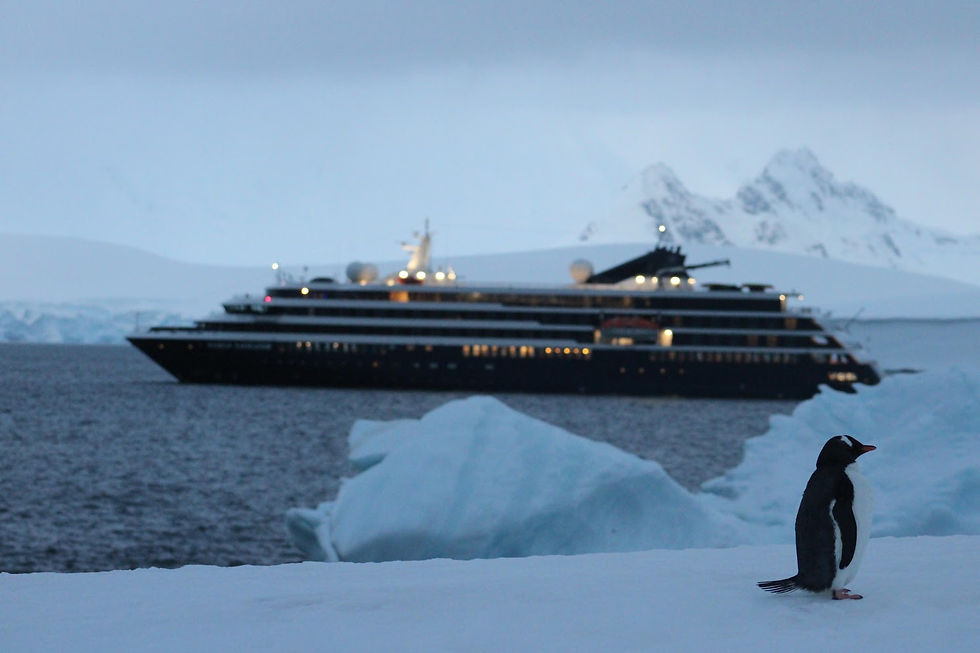
As I settled into my trench, I learned something delightful.
We were camping in a former penguin gathering area.
That means beneath the snow were layers of penguin guano. If you’re wondering, penguins mix their pee and poop. It’s called guano. Yes, I learned that right before bed.
Under that were layers of green algae, one of the key microorganisms that survive Antarctica’s extreme climate.
So technically, I was sleeping on layers of polar ecosystem history.
Antarctica does not edit itself for comfort... And I kind of love that.
Trying to Sleep on the White Continent
It was around 10:30 p.m. when I climbed into the layers. The temperature hovered near 28 degrees Fahrenheit. Winds above us were stronger, but inside the coffin hole, it was surprisingly calm.
They told us we wouldn’t sleep much.
They were correct.
You’re warm, but you’re aware. Your boots are tucked inside the bivy bag so they don’t freeze. Your outer layers are sealed in a waterproof bag. Everything feels slightly compressed.
During Antarctic summer — typically November through March — it never gets fully dark. Around 1:00 a.m., I opened my eyes to a soft twilight glow and heard snow hitting the bivy bag.
The silence felt almost sacred... No city hum. No distant traffic. Just wind and awareness.
Uncomfortable? A little.
Unforgettable? Completely.
The Storm We Didn’t See Coming

At some point during the night, the wind intensified. I remember noticing it, then deciding I was too tired to care.
What I didn’t know was that a fast-moving storm had developed offshore. The ship and expedition crew were communicating about whether they should evacuate us.
The storm came quickly and passed quickly. It was actually safer to keep us in place than to move campers during peak winds.
That’s the difference between adventure and managed expedition travel. You are never alone out there. There is always a trained team evaluating conditions in real time.
How Camping Fits Into an Antarctica Expedition Cruise
Camping in Antarctica is just one optional activity within a broader Antarctica expedition cruise experience.
On a typical voyage, your days may include:
Zodiac landings on remote shores
Guided wildlife walks
Glacier viewing
Kayaking excursions
Educational lectures from polar experts
Camping is an extension of that exploration. It’s designed for travelers who want to experience the White Continent in its most immersive form.
If you’re wondering what to pack for something like this, I’ve outlined everything in detail here. Because yes, the right layers matter.
Safety in Antarctica

The expedition crew did not sleep. They monitored weather conditions all night. The ship maintained a visible line of sight to the campsite. Our bright expedition parkas made us easy to spot even in low light.
Camping in Antarctica only happens under strict environmental and safety guidelines.
Adventure should feel expansive. Never careless.
The Morning After

We returned to the ship around 5:30 a.m. Warm towels were waiting. So was a breakfast box and a hot toddy if you wanted one.
That moment stepping back onboard felt like flipping from Explorer to Luxury.
I took my breakfast to my cabin and slept for five glorious hours in a real bed.
Later, I visited the mudroom , the staging area for all expedition activities. Sleeping bags were hanging neatly to dry. Liners were being washed. Everything was organized and intentional.
That balance is what makes Antarctica travel so powerful. You push into something bold and unfamiliar. Then you return to warmth and care.
Is Camping in Antarctica for You?
Camping in Antarctica is not about comfort. It’s about perspective. It’s about choosing to do something that stretches you in one of the most remote places on Earth.
It’s humbling. It’s empowering. It stays with you.
If this story stirred something in you... curiosity, maybe even a quiet “I wonder…” , that’s worth exploring.
We can plan an Antarcic cruise where camping is an option. You’ll be taken care of on the ship. You’ll dig your own coffin hole on land. And you’ll come home with a story that changes you.
If Antarctica has been quietly calling your name, let’s talk about it.


Comments