


Sargassum Season in Mexico: What You Need to Know Before Booking Your Vacation

“But what about the sargassum?”

I get this question all the time from travelers considering a vacation to Mexico. And I understand why.
You’ve probably seen the pictures. Beautiful Caribbean beaches are covered with piles of brown seaweed. Maybe you’ve seen someone post from their vacation saying the beach was perfect. Then, three days later, someone else shares a very different picture from a resort nearby.
Suddenly, that relaxing Mexico vacation feels a little more complicated.
Here’s the good news: sargassum is something we can consider when planning your vacation. It isn’t something you need to panic about.
However, there are a few things you need to understand before booking.
First, let’s make sure we’re talking about the same part of Mexico.
This article focuses on Mexico’s Caribbean coast along the Yucatán Peninsula. That includes popular vacation areas like Cancún, Playa Mujeres, Costa Mujeres, Riviera Maya, Playa del Carmen, and Tulum. We aren’t talking about Cabo San Lucas or Puerto Vallarta. Those destinations sit on Mexico’s Pacific coast and experience different ocean conditions.
So, if you’re dreaming about the turquoise waters of the Mexican Caribbean, let’s talk about sargassum season in Mexico.
Table of Contents
What Is Sargassum?

Here’s something that gets lost in all those less-than-pretty beach pictures: sargassum itself isn’t the villain.
Sargassum is a naturally occurring brown algae that floats in the ocean. Offshore, it creates habitat for marine life and plays a role in the larger ocean ecosystem.
The problem for vacationers happens when large amounts wash ashore. Once sargassum accumulates along the coastline, it can cover the sand and make swimming unpleasant. As it decomposes, it can also create a distinctive smell.
That’s the sargassum travelers worry about.
However, seeing sargassum floating somewhere in the Caribbean doesn’t mean every beach will suddenly be covered with it.
Where it lands is much more complicated.
When Is Sargassum Season in Mexico?
If you’re trying to avoid sargassum completely, I wish I could give you a set of guaranteed dates but Mother Nature refuses to make reservations.
Mexico’s Secretaría de Marina monitors sargassum in the Mexican Caribbean. Its monitoring has identified the primary cycle along the Quintana Roo coastline as April through October.
However, that doesn’t mean every beach will have sargassum throughout those months.
Think about the year more like this:
Time of Year | Typical Sargassum Risk |
November–February | Lower |
March–April | Increasing |
May–August | Highest |
September–October | Usually decreasing |
This is a historical pattern, not a beach forecast.
That distinction matters.
You could travel during a higher-risk month and find a beautiful beach. You could also travel during a normally quieter period and encounter some sargassum.
Conditions also vary from year to year.
That’s why I wouldn’t recommend choosing your entire vacation based on a chart.
Why Sargassum Conditions Can Change So Quickly

“My friend stayed there last June, and their beach was perfect.”
I hear variations of this frequently.
And I believe your friend.
The problem is that their experience tells us what happened on that beach during that trip. It doesn’t tell us what the beach will look like during yours.
Ocean currents move sargassum. Wind affects where it travels. Weather systems change conditions. The direction a beach faces can also influence how much sargassum reaches shore.
That means conditions can vary between destinations, resorts, and individual beaches.
They can also change quickly.
There are monitoring systems that help us see what is happening offshore and along the coastline. Those become especially useful as your vacation gets closer.
Quintana Roo has also used a beach monitoring system that classifies sargassum levels from low to very high.
Those tools give us information. They do not give us a crystal ball.
I cannot tell you in January exactly what your resort’s beach will look like in July. Neither can anyone else.
Be cautious when someone promises otherwise.
Does Every Beach Get the Same Amount of Sargassum?

This is one of the most important things to understand about sargassum season in Mexico.
Not every beach experiences the same conditions.
Geography matters.
A beach facing directly toward incoming currents may receive more sargassum than one with a different orientation. Islands can have significant differences between one side and another.
This is why you’ll sometimes see gorgeous beach photos from one area while another location experiences heavy sargassum at the same time.
Places such as Isla Mujeres and parts of Cozumel may sometimes experience lower exposure because of their location and beach orientation.
But notice the words I just used.
May.
Sometimes.
Lower exposure.
I didn’t say sargassum-free. I’m very cautious about that phrase.
The Caribbean is a living, changing environment. No resort or travel advisor controls the wind, currents, or ocean.
We can use geography and historical patterns to make thoughtful choices. We cannot guarantee what nature will do.
Can You Choose a Resort With Less Sargassum?
When someone asks me which resort has the least sargassum, I usually need to ask a different question first:

How important is the beach to your vacation?
That answer changes everything.
Maybe your perfect Mexico vacation involves a gorgeous pool, fabulous food, a spa treatment, a few adventures, and a frozen Margarita or cold Coke Zero.
We have options.
But perhaps you’ve been dreaming about spending six hours every day floating in clear turquoise Caribbean water. You want to walk out of your resort each morning and immediately put your toes in the ocean.
Now the beach isn’t simply one feature of the resort... The beach is the vacation.
In that case, I’m going to give sargassum much more weight when we talk about location, resort, and time of year.
This is also why I don’t believe there is one “best resort in Mexico.” There is a best resort for you.
Your priorities should drive that decision.
That’s true far beyond the beach. Food, atmosphere, service, activities, and resort personality all shape your experience. I look at all of those details when helping clients decide how to choose the right all-inclusive resort.
What Do Resorts Do About Sargassum?
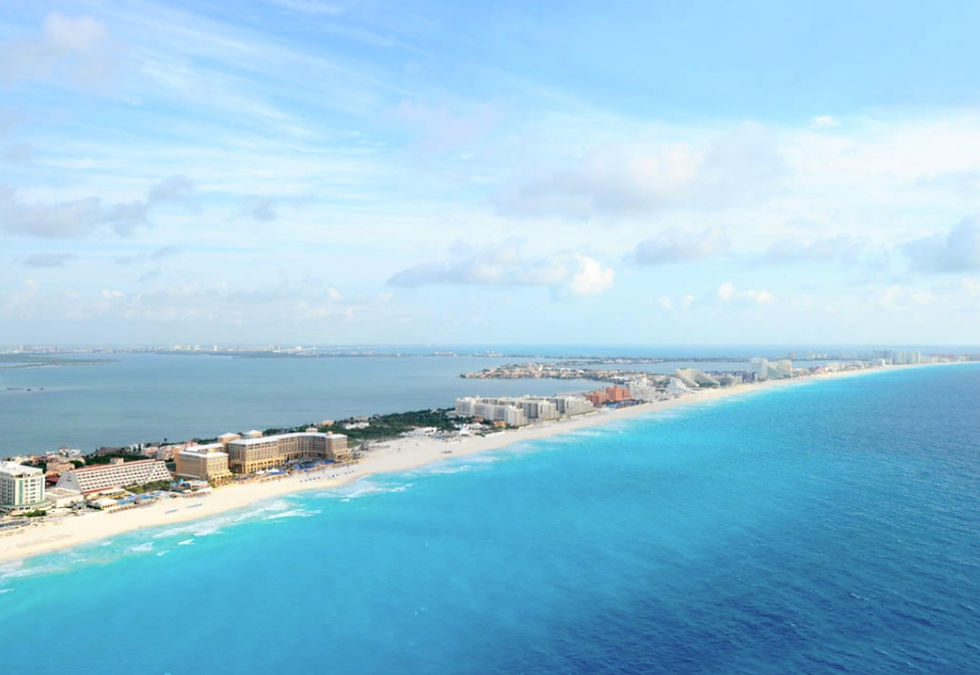
Here’s another detail that can make a big difference: resorts don’t all handle sargassum the same way.
Some destinations and resorts invest significantly in mitigation and cleanup.
You may see offshore barriers designed to intercept sargassum. Boats can collect it before it reaches shore. Once it lands, beach crews may work throughout the day to remove it.
Mexico has invested heavily in these efforts along the Quintana Roo coastline. Government strategies include offshore collection, coastal barriers, beach removal, and expanded equipment.
But even an excellent resort cannot stop every piece of sargassum from reaching its beach.
A resort can manage sargassum. It cannot control the ocean.
When I help someone compare resorts, I’m not only interested in the beautiful room pictures.
I want to know how the property operates.
How well does it maintain the beach? How quickly does the staff respond when sargassum arrives? What other experiences does the resort offer if beach conditions aren’t ideal?
Those details can have a much bigger impact on your vacation than another pretty lobby.
Will Sargassum Ruin Your Mexico Vacation?
I’m not going to tell you sargassum doesn’t matter.
For some travelers, it matters a lot.
If you’ve spent months dreaming about swimming in clear Caribbean water, arriving during a significant sargassum event would be disappointing.
That’s real.
But a Mexico vacation can also include incredible pools, wonderful restaurants, cenotes, cultural experiences, spa days, snorkeling, archaeological sites, food tours, and adventures throughout the Yucatán Peninsula.
Your vacation doesn’t necessarily disappear because the beach isn’t perfect.
The question is how much that particular part of the experience matters to you.
That’s a much better question than, “Will there be sargassum?”
Because nobody can answer that with certainty months before your vacation.
Instead ask, “If there is sargassum, how much will it affect the vacation I want?”
Now we can actually plan.
The Surprising Connection I Learned About in Mexico
I learned something during a recent trip to Mexico that changed the way I thought about sargassum.
Sargassum season overlaps with another pretty spectacular season in the Mexican Caribbean:

Whale shark season.
That stopped me in my tracks.
Whale sharks are enormous, beautiful filter feeders. Despite their intimidating name and size, they primarily eat tiny organisms such as plankton.
Sargassum itself isn’t “whale shark food.” The relationship is more interesting than that. Floating sargassum supports a rich marine ecosystem, while the productive waters around the northern Yucatán Peninsula attract the plankton that brings whale sharks to the area.
Mexico’s National Commission of Natural Protected Areas reports that whale sharks are regularly observed in the northern Caribbean near Isla Holbox from approximately May through September.
Sound familiar?
Those months overlap with the time many travelers are most concerned about sargassum.
Nature is funny like that.
We look at something washing onto the beach and think, “Get this stuff out of here!”
Meanwhile, there’s an entire ecosystem happening beyond our beach chair.
Want to See Whale Sharks? Head North to Holbox

If swimming near a whale shark sounds like your kind of adventure, look north toward Holbox.
Holbox feels completely different from the large resort areas farther south.
It’s a tiny, laid-back island with sandy streets and a wonderfully unhurried personality. This isn’t the place you go because you want a mega-resort with a giant swim-up bar.
You go because you want something different.
Whale shark excursions operate seasonally in the waters near Holbox and neighboring protected areas. The island also gives you access to wildlife, beautiful water, and a slower style of Mexico travel.
This is the part of travel I love.
Sometimes the thing we initially see as an inconvenience becomes an invitation to understand a destination differently.
Sargassum isn't just something happening to your vacation. It's part of a much larger natural environment you're visiting.
And sometimes that environment gives us whale sharks.
That feels like a pretty good trade.
What I Tell My Clients About Booking During Sargassum Season

I don’t think you should eliminate the Mexican Caribbean simply because you’re traveling during sargassum season.
I also don’t think you should ignore it.
We plan around what matters most to you.
If having a pristine beach is your number-one priority, tell me that. We can consider time of year, geography, resort location, and other destinations.
If the beach is only one part of what you want, we have even more flexibility.
Most importantly, go into your vacation with realistic expectations.
You aren't booking a controlled environment. You're traveling to the Caribbean. There will always be things we cannot predict.
My job isn’t to promise you that Mother Nature will cooperate. My job is to understand the vacation you're dreaming about, explain the things that could affect it, and help you make a confident decision.
Sargassum is something to plan for, not panic about.
And once we know what matters most to you, planning gets much easier.
Frequently Asked Questions About Sargassum in Mexico
Does sargassum smell?

Fresh sargassum floating in the ocean isn't the primary odor problem. The smell develops as large quantities accumulate and decompose along the shoreline. Decomposition can release hydrogen sulfide, which creates the recognizable “rotten egg” smell.
Is sargassum dangerous to swim in?
I wouldn't recommend walking through or swimming in large accumulations of decomposing sargassum.
The CDC advises travelers to avoid direct skin exposure to sargassum. Exposure to decomposing seaweed can cause skin irritation and symptoms including headaches, nausea, and breathing difficulties. If you come into contact with it, rinse thoroughly with fresh water.
If you're experiencing respiratory symptoms, move away from the affected area and seek medical attention when necessary.
Does Cabo have a sargassum season?
The sargassum issue discussed in this article primarily affects Mexico's Caribbean (Eastern) coastline.
Cabo San Lucas sits on the Baja California Peninsula along Mexico's Pacific side. It's not part of the Caribbean sargassum pattern we're discussing here.
That's another reason “Mexico has sargassum” is much too broad a statement.
Mexico has a lot of coastline!
Is Isla Mujeres better during sargassum season?
Some beaches around Isla Mujeres can experience lower sargassum exposure because of their geography and orientation.
That does not make the island sargassum-proof.
If beach conditions are especially important to your vacation, look at current conditions closer to departure instead of relying solely on historical patterns.
How can I check sargassum conditions before my trip?
Conditions become much more meaningful closer to travel.
Look for official monitoring from Quintana Roo and other reputable scientific or government sources rather than relying on one social media photo.
Also remember that a picture from one beach doesn't necessarily represent the entire Mexican Caribbean.
Should I cancel my Mexico vacation because of sargassum?
I wouldn't cancel a vacation based simply on the fact that your dates fall during sargassum season.
First, consider current conditions and how far away your trip is.
Then consider what you actually want from the vacation.
If the beach is everything to you, significant sargassum may deserve more attention. If you're equally excited about the resort, pools, food, excursions, and culture, your decision may be completely different.
Where should I travel if I'm very worried about sargassum?
Start by talking about why you're worried.
If having consistently beautiful beach conditions is your highest priority, we can consider time of year, beaches with historically lower exposure, or destinations outside Mexico's Caribbean coast.
You don't need to become an expert in ocean currents to choose your vacation. You just need to know what matters most to you.
Plan Your Mexico Vacation Around What Matters to You
Choosing a Mexico resort shouldn't require you to become an expert in ocean currents, beach orientation, and sargassum forecasts.
That's part of what I consider when helping you choose where to stay.
Tell me what matters most to you. Maybe it's the beach. Maybe it's the food, the pool, the adventures, or a glorious combination of all four.
We'll look at the whole picture and find a vacation that fits.
Because you deserve to spend your vacation enjoying Mexico, not standing on the beach wondering if you picked the wrong one.

About the Author: Jennifer Ormesher is the owner and founder of Canopy of Stars Travel. After 30 years in education, she turned her love of travel, teaching, and helping people into a career creating personalized vacations. Her travel style is 50% Princess and 50% Explorer. She loves a beautiful resort and thoughtful service just as much as discovering the culture, wildlife, and experiences beyond it. Jennifer specializes in helping travelers explore Mexico, Europe, Africa, Antarctica, and other bucket-list destinations with confidence.


Comments