


First-Time Cruise Embarkation and Disembarkation: What to Expect


Your cruise is booked. Your bags are almost packed. Now you’re thinking about the part nobody really explains.
What actually happens when you get to the cruise terminal?
Where does your luggage go? What documents do you need? Can you head straight to your cabin? And how do thousands of people get off the ship when the cruise ends?
If you’re a first-time cruiser, the cruise embarkation process can feel intimidating. Everyone around you seems to know exactly where to go.
Here’s the secret: they’ve simply done it before.
I’ve sailed on more than a dozen cruises across several different cruise lines. After a few sailings, embarkation and disembarkation become second nature.
For your first cruise, you just need someone to tell you what happens next.
That’s exactly what we’re going to do.
Table of Contents
What Does Embarkation Mean on a Cruise?
Let’s get the cruise vocabulary out of the way first.
Embarkation is simply the process of getting onto your cruise ship at the beginning of your vacation.
During embarkation, the cruise line confirms your identity and travel documents. You’ll also go through security before boarding the ship.
Most cruise lines assign guests an arrival window or boarding time. Follow it.
Arriving much earlier doesn’t necessarily mean you’ll get onboard sooner. Instead, you may spend extra time standing around a very busy cruise terminal.
This is one of those moments when I tell clients to put on their patient pants. Embarkation day involves thousands of excited people arriving within a relatively short period.
The good news? The process usually moves much more smoothly when you arrive prepared.
Before Embarkation Day: Don’t Start Your Vacation With a Sprint
One of my strongest cruise recommendations actually has nothing to do with the ship.
Give yourself time to get there.
For cruises departing from a domestic port, I recommend arriving at least one day before embarkation.
For an international departure, I recommend arriving at least two days early.
I follow that advice myself, and one trip reminded me exactly why.

I flew into Buenos Aires two days before leaving for my Antarctica cruise.
My luggage didn't.
The airline had lost it.
Thankfully, my suitcase eventually arrived. However, it showed up only about six hours before I needed to leave for the cruise.
Six hours.
Had I flown into Buenos Aires on embarkation day, there is a very good chance I would have sailed to Antarctica without my suitcase.
Unfortunately, I've seen the other outcome, too.
Some clients were sailing from Rome and chose to arrive only one day early despite our recommendation. The airline lost their luggage, and it wasn't returned before they embarked.
The ship isn't going to wait for your suitcase. It isn't going to wait for a delayed flight, either.
And yes, cruise ships really can leave without you. If that thought makes you nervous, read Yes, Cruise Ships Really Can Leave Without You (Ask Me How I Know!) before your trip.
Arriving early gives you breathing room when travel doesn't go according to plan. It also gives you time to enjoy your departure city instead of starting vacation exhausted and stressed.
Before embarkation day, complete your cruise line's online check-in and download its app. Having the app ready before reaching the terminal can make the check-in process easier.
Then check your documents one more time.
After that?
Go find a great breakfast.
You have a cruise to catch.
What Happens When You Arrive at the Cruise Terminal?
You’ve made it to the port. Now the cruise embarkation process really begins.
Your exact experience will vary by cruise line and port. However, the basic process is usually similar.
When you arrive, you’ll typically see porters collecting checked luggage near the terminal. Your bags should already have the cruise line’s luggage tags attached.
Hand over the bags you don’t want to carry onboard yourself. They’ll be screened and delivered to your cabin later.
Here’s a little detail that’s easy to overlook: bring some small bills for tips.
Porters at the terminal generally aren’t cruise line employees. I always arrive with dollar bills ready so I can tip the person handling my luggage.

Then you’ll head inside the terminal.
You’ll go through security and have your travel documents checked. Depending on the cruise line, you may also complete additional check-in steps before boarding.
This is why I recommend downloading the cruise line’s app before you leave home. Don't wait until you're standing inside a crowded terminal trying to download it.
Most importantly, arrive during your assigned arrival window.
You don’t win a prize for being the first person at the terminal.
You might, however, win an extended opportunity to stand in line.
What Goes in Your Cruise Carry-On?
Once you hand your suitcase to a porter, you probably won’t see it again for several hours. So think of your carry-on as your “I can happily start my vacation without my suitcase” bag.
Keep your travel documents, medications, valuables and electronics with you. I’d also pack anything you absolutely need during those first few hours onboard.
Then I add two things many first-time cruisers don't think about.
A swimsuit and something to wear to dinner.
I often change into my swimsuit and head to the pool or hot tub on embarkation day. I don't want to wait for my suitcase before I can start enjoying the ship.
I also pack a sundress for dinner.
Your luggage will probably reach your cabin with plenty of time to spare. But if it doesn't, you won't spend your first evening wondering what you're going to wear.
Pro tip: Don't put your passport or other required travel documents inside the luggage you give the porter.
You need those documents to board the ship.
Your swimsuit can survive a few hours without you.
Your passport cannot.
You’re Onboard! Now What?
This is the moment you’ve been waiting for.

You walk onto the ship, hear the welcome music, look around and think:
Now what?
My first priority is getting the mandatory safety requirements out of the way.
The exact procedure varies by cruise line. If your cruise line allows you to complete part of the safety briefing electronically, I like to do that as early as possible. Once onboard, I visit my assigned muster station and finish whatever is required.
Then I can start my vacation.
Next up: lunch.
The buffet is an easy option, but embarkation-day buffets can be incredibly busy. Almost everyone boards hungry, and their cabins may not be ready yet.
If crowds aren't your thing, I have another idea.
When available, consider making a reservation at a specialty restaurant for lunch. It can be a much calmer way to begin your cruise.
After lunch, I’m heading toward the pool deck.
Grab a drink, find a good spot and get ready for sail-away. Watching the ship pull away from port is one of those moments when vacation suddenly feels real.
One final embarkation-day warning: prepare yourself for the elevators.
They can be difficult to get during those first few hours. Guests are boarding, luggage is moving around the ship, and everyone is trying to figure out where they're going.
You may be taking the stairs.
Consider it your first onboard excursion.
What Is the Muster Drill?

Every passenger must participate in the cruise line’s required safety procedures before sailing.
Your muster station is the location where you would report during an emergency.
Years ago, muster drills often meant everyone gathering at the same time for a traditional safety briefing. Today, the exact process varies by cruise line and ship.
You may be able to complete portions through the cruise line’s app or your stateroom television. You may also need to visit your assigned muster station.
Follow the instructions for your particular sailing.
My preference is simple: get it done early.
You don’t want to be thinking about a safety drill when you could be on the pool deck getting ready for sail-away.
When Will Your Cabin and Luggage Be Ready?
Here's something that surprises some first-time cruisers:
Getting onto the ship doesn't necessarily mean you can immediately get into your cabin.
Your stateroom may still be getting prepared when you board.
That's okay.
Go have lunch. Explore the ship. Find the pool deck. Start learning your way around.
Your checked luggage may take even longer to arrive.
Remember, crew members are sorting and delivering luggage for thousands of passengers. Your suitcase may appear outside your cabin later in the afternoon.
This is exactly why we packed that swimsuit and sundress in the carry-on.
You aren't waiting for your luggage to start your vacation. You're already on it.
The Last Night: Preparing for Cruise Disembarkation
I know. We just got you onboard, and now I’m already making you leave. But understanding cruise disembarkation before your trip makes that final morning much easier.
Your cruise line will provide instructions explaining how disembarkation works for your sailing.
If you want the crew to handle your checked luggage, you'll usually receive luggage tags and instructions for placing your bags outside your cabin.
And this brings me to one of my most important pieces of cruise advice:
Keep clothes for the next morning.
I have actually seen people leave a cruise ship in their pajamas because they packed every piece of clothing in their suitcase and put it outside their cabin the night before.
Don't be those people.
Before your suitcase leaves your cabin, set aside everything you'll need overnight and the next morning. That includes toiletries, medications, travel documents, electronics and valuables.
And pants.
Definitely pants.
Should You Carry Your Own Luggage Off the Ship?
Most cruises offer two basic choices for luggage on disembarkation day.
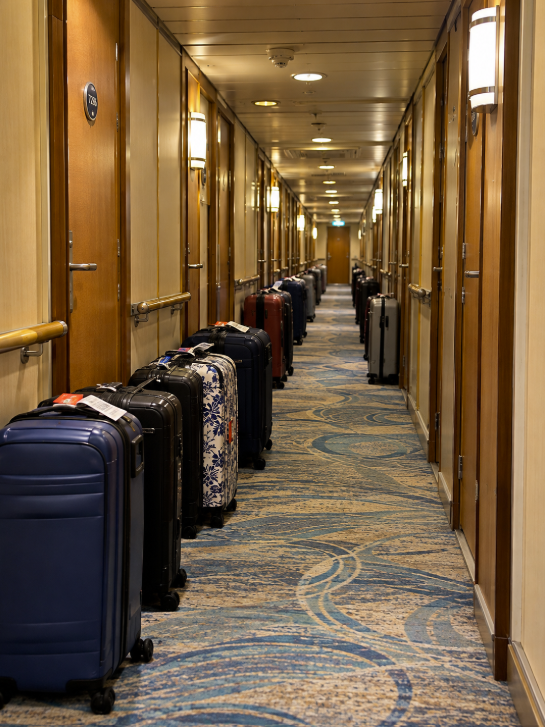
You can let the cruise line handle your checked bags, or you can carry everything off yourself.
You can probably guess which one I choose.
I'm 50% Princess, so you know I'm letting someone else carry my bags for me.
I normally put my luggage out and keep only my backpack, toiletries and clothes for the next day with me.
Self-assist disembarkation can make sense if you need to leave the ship as early as possible. Guests carrying their own luggage are often among the earlier groups allowed to leave.
There's a trade-off.
If you choose self-assist, you are responsible for every piece of your luggage. Don't count on having someone available to help you.
And remember our embarkation-day conversation about elevators?
Disembarkation morning can be just as busy. If you can't comfortably manage your luggage on stairs, self-assist may not be your best option.
Personally, I'll take the easier morning.
Princess, remember?
What Happens on Cruise Disembarkation Morning?
Pack whatever you kept with you overnight and go have breakfast.
Your cruise line will provide instructions about when and where you should wait to disembark. Guests are generally called in groups rather than everyone trying to leave the ship simultaneously.
If I'm in a later group, I'm not spending that time hovering near the exit.
I'll find somewhere comfortable to sit, people-watch, enjoy a little sunshine and have one final Coke Zero.
Once your group is called, you'll leave the ship and retrieve your luggage if the crew handled it overnight.
Depending on your itinerary and port, you may also complete immigration or customs procedures. Follow the instructions provided onboard. Procedures can vary depending on the port, itinerary and your citizenship.
Then you're officially back on land.
Sad, I know.
How Early Should You Fly Home After a Cruise?
Here's where I see a potentially expensive first-time cruiser mistake.
Your itinerary might show the ship arriving in port at 6:00 a.m.
That does not mean you should book an 8:30 a.m. flight.
The ship must dock and receive clearance before passengers can begin leaving. Then you need to disembark, retrieve luggage, complete any required immigration or customs procedures, and get to the airport.
You still have to check luggage and get through airport security once you arrive.
That's a lot of moving pieces.
As a general rule, we recommend flights after noon. That provides more breathing room between leaving the ship and getting to your gate.
The best flight time still depends on the port, airport, itinerary and transportation involved.
If an earlier flight is absolutely necessary, self-assist disembarkation may help you leave sooner. But that means carrying your luggage yourself.
This is one of those places where a little breathing room is worth far more than shaving an hour or two off your travel day.
You also don't have to head straight to the airport. If your cruise ends somewhere worth exploring, a post-cruise extension can turn your final port into part of the vacation.
You just spent your vacation relaxing.
Let's not undo all that work before you reach the airport.
Final Thoughts: Your First Cruise Doesn't Have to Feel Intimidating

The first time you walk into a cruise terminal, it can seem like everyone else knows a secret set of rules.
They don't. They've simply done it before.
Now you know what to expect, too.
Arrive in your departure city early. Complete your check-in before reaching the terminal. Pack a smart carry-on. Follow your cruise line's instructions.
Give yourself plenty of time on both ends of your vacation.
Most importantly, don't let the logistics distract you from the moment you've been waiting for.
Eventually, the luggage is handed over. The documents are checked. The muster requirement is finished.
Then you're standing on the pool deck as the ship pulls away.
That's when embarkation ends and your cruise really begins.
Frequently Asked Questions
Can I take a cruise without a passport?
Documentation requirements depend on your itinerary, citizenship and cruise line. Some U.S. citizens may be able to use other documents on qualifying closed-loop cruises, but I strongly prefer traveling with a passport. It can make things much easier if an emergency requires you to fly home from another country. Always verify the requirements for your specific sailing before departure.
What happens if I miss the ship on embarkation day?
Your options depend on the itinerary, cruise line and reason you missed embarkation. You may need to arrange transportation to a later port, and joining the cruise later isn't always possible. This is one reason I recommend arriving at least one day early for domestic departures and two days early for international ones.
Can I bring alcohol or other drinks onto a cruise ship?
Each cruise line establishes its own rules for bringing beverages onboard. Some allow limited quantities of certain beverages, while others have different restrictions. Check your cruise line's current policy before packing anything.
Can I carry all my luggage onto the cruise ship myself?
Policies vary by cruise line and port. Even when you can carry luggage onboard, remember that your cabin may not be immediately available. You'll need to keep anything you carry with you until you can access your stateroom.
What happens if my luggage doesn't arrive at my cabin?
Don't immediately assume it's lost. Checked bags can take several hours to reach staterooms on embarkation day. If your luggage still hasn't appeared later, follow your cruise line's instructions for reporting a missing bag. That's also why medications, documents, valuables and first-day necessities belong in your carry-on.
Ready to Make Your First Cruise Feel Easy?
Your first cruise should feel exciting, not like another vacation you have to figure out on your own.
At Canopy of Stars Travel, we help you choose the right cruise, cabin, itinerary, and pre- and post-cruise plans. We’ll also make sure you know what to expect before you ever arrive at the port.

About the Author: Jennifer Ormesher is the owner and founder of Canopy of Stars Travel. After 30 years in education, she turned her love of travel, teaching, and helping people into a career creating personalized vacations. Her travel style is 50% Princess and 50% Explorer. She loves a beautiful resort and thoughtful service just as much as discovering the culture, wildlife, and experiences beyond it. Jennifer specializes in helping travelers explore Mexico, Europe, Africa, Antarctica, and other bucket-list destinations with confidence.


Comments